Growing up in Iowa we had many names for this recipe. In our house we simply called this recipe cheesy potatoes but many of my school chums would call it church potatoes because it was a regular at any church carry-in dish.
In most areas of our country it appears to be named funeral potatoes. Either way you refer to it, you cannot go wrong making this recipe!
Shredded hashbrowns mixed with a creamy cheesy sauce, spread in a 9×13 pan and topped with butter mixed crushed cornflakes that crisp during the baking process. You will see me making this recipe time after time!
Any time there is an Easter get together or pot luck I am requested to make these! Anytime the family group text discusses who is bringing potatoes I will gladly bring these!
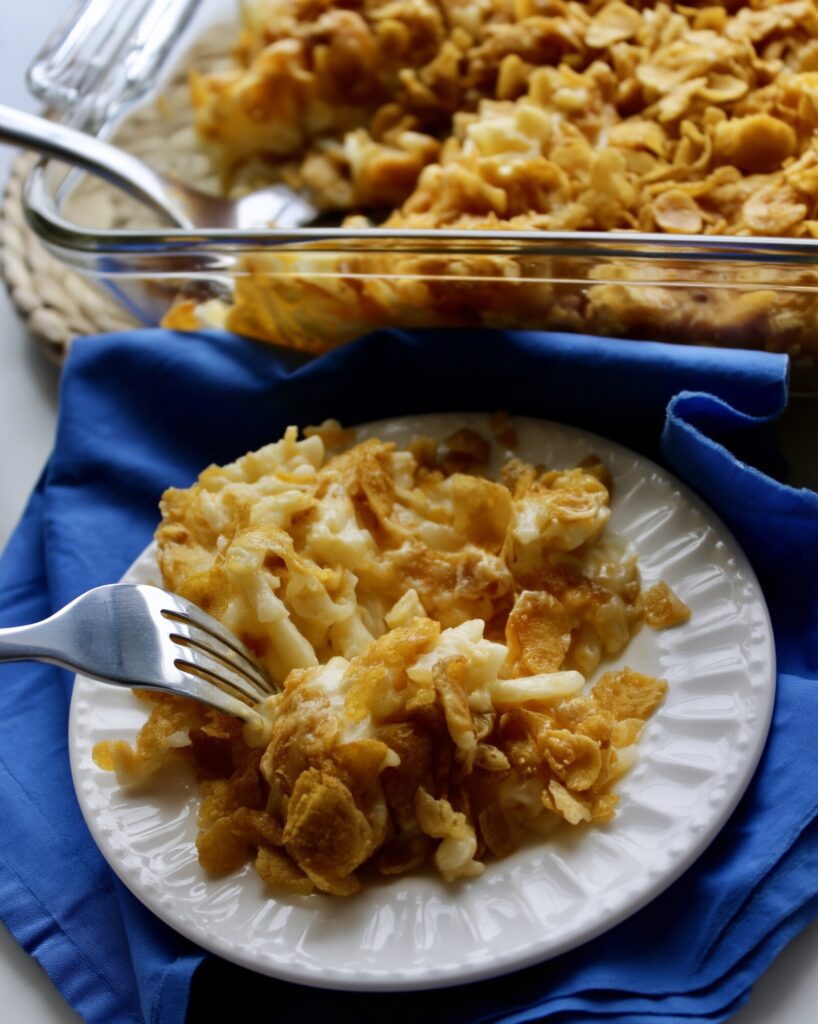
Why They’re Called Funeral Potatoes
Funeral potatoes get their name from where they originated, at funerals! In smaller communities it was (and probably still is) customary for neighbors and church members to bring food to the family in mourning as well as to the get together after the funeral.
Cheesy Potatoes made a large appearance for this event. The dish is inexpensive, easy to make ahead, easy to transport and each pan feeds lots of people.
Funeral potatoes are still popular today for the same reason they were popular in the past because they’re handy! All those characteristics that make it the perfect short notice feed the masses dish are also what makes them a great addition to a holiday dinner or just a hectic Sunday!
Why This Casserole Works
The hashbrowns lend their tender shreds of potatoes and the soup and sour cream forms the rich, thick sauce to coat every last shred of potato. Add in some flavor bombs in the form of butter and cheddar and you’ll have a dish that people will fight over at a pot luck (sorry…I just had to say that one).
Then, throw on top some crunch with the cornflakes for the perfect creamy-meets-crunchy casserole.
But the best part is how ridiculously easy this dish is to prepare. There are two bowls, one for the potatoes and one for the cornflake mixture. Everything else happens in the baking dish! Stir, spread, done!
The forgiving, staple ingredients are most likely items that you already have on hand. I defy anyone that can melt butter and open a can to not be able to make this recipe! No wonder it’s a staple on many a holiday table!
The Ingredients, One at a Time
Frozen shredded hashbrowns
For this recipe I like using bagged shredded hash browns (you will need one 24 ounce bag) as opposed to freshly shredded potatoes. You can definitely make with shredded fresh potatoes but the moisture/consistency from the bagged hashbrowns are just right for a perfectly prepared hashbrown casserole each and every time!
The one secret to not ending up with a soupy disaster of a casserole: Be sure to completely defrost the hash browns before combining! This step cannot be skipped!
Set frozen shredded hash browns in colander in sink to thaw for about an hour (which will give you time to prepare the rest of the recipe ingredients). Baked from a frozen state, the hash browns will release water as they bake.
Cream of chicken soup
The cream of chicken is what most folks would use. That’s the one I’d use, too. If you don’t have it on hand, cream of mushroom works as a substitute in a pinch.
Don’t skip the soup. It serves several purposes. It balances the acidity of the sour cream.
The soup adds a lot of savory flavor, but it also helps bind everything together so that you get a good cohesive bite of potato with every scoop.
Sour cream
I know 2 cups is a lot but sour cream really adds to this recipe! It makes the potatoes extra creamy (with a slight tang!)
Be sure to use full fat sour cream (low fat sour cream won’t bake up quite as creamy/rich) and I would also encourage you to use all of it!
Butter
This recipe calls for 1 cup of melted butter (full recipe below) half of the melted butter will be added to the potato mixture, the other ½ cup is used in the cornflake topping (the cornflakes tossed in melted butter helps keep the cornflakes crispy instead of baking up soggily).
Sharp cheddar cheese
I really recommend using sharp cheddar, as its flavor is much more pronounced in this dish. Again the full recipe calls for 2 cups of shredded cheddar, so trust me this casserole NEEDS all that cheese!!
By far the BEST cheddar to use is a block of cheddar that you shred yourself, because pre-shredded cheese doesn’t melt nearly as well as cheese you shred yourself (this is due to a powder added to pre-shredded cheese to keep the cheese separated in the bag). This powder also keeps the cheese from melting well in recipes.
Salt and onion powder
Lastly, don’t skimp on the 1 teaspoon salt & 1 teaspoon onion powder. Believe me the potatoes DO NOT turn out tasting like onion!
It’s just a subtle flavor that helps make the whole thing taste like a complete dish.
Cornflakes
You’ll need three cups of crushed cornflakes. I just use the plain original type.
Crush the cornflakes in your hands until they’re in smaller pieces, but not ground into a crumb – if they’re too small, the topping will bake into a solid crust that won’t be as crunchy.
How to Make Funeral Potatoes
Place hash browns in a colander in sink and allow to thaw (approx 1 hr).
While potatoes are thawing, preheat oven to 350°F. Crush Cornflakes into medium sized bowl. Grease a 9×13 baking dish.
Place thawed hash browns into a large bowl along with sour cream, soup, 1/2 cup melted butter and stir together. Add shredded cheddar, onion powder and salt. Stir together until well mixed.
Add to prepared 9 x13 pan and spread out into an even layer making sure to get all the way into each corner.
Add remaining 1/2 cup of melted butter to the cornflakes. Toss until evenly coated. Spoon prepared cornflakes evenly over potato mixture.
Bake, uncovered, at 350°F approx 45 to 50 min or until heated through, bubbly at the edges and Cornflakes are dark golden brown in color.
Remove from oven and allow to set on counter approx 5 min (this will allow casserole to set up a little and will help it keep together better when serving). Spoon to serve.
Tips for Getting It Right
If you’ve made hashbrown casserole in the past only to find that it came out way too wet, chances are that your hashbrowns went into the dish while still frozen. Make sure that your potatoes are thoroughly defrosted before using them in this recipe.
While assembling your casserole, make sure that your hashbrown potatoes are evenly spread throughout the dish (even up into the corners!) so that everything will cook evenly. If there’s more potatoes piled in the center than the edges, your edges will be well-cooked, but your middle might not be ready to eat.
(This is another reason not to double this recipe in one pan because it will pile too high to cook through, but if you’d like to make double the recipe, use two 9×13 pans, and cook them side-by-side.)
Shredding your own cheese from the block (with a box grater) takes only a couple minutes, and will yield a smoother cheese sauce for your casserole.
Leave some of your cornflakes larger pieces instead of grinding them completely into crumbs, which will help keep the cornflake mixture from packing too tightly and becoming less crispy. Be sure to toss well with the butter because each cornflake should be coated, so they come out of the oven crunchy instead of just toasted.
If your topping is getting too brown before your casserole is bubbling, try covering with some loosely draped aluminum foil during cooking (leave the edges uncrimped, so that the steam can still escape). Remove the foil towards the end of cooking so that your topping can brown well.
Once your casserole comes out of the oven, it will appear very loose and saucy, which is normal! Once it has had a chance to sit on the counter for five minutes, it’ll firm up, and each serving will hold its shape well.
What to Serve with Funeral Potatoes
You can make these anytime of year, but they’re especially good next to a roast.
Since they’re on the creamy and cheesy side they pair well with Easter ham (the salty glaze is the perfect complement!) as well as with roast turkey, roast chicken, pork tenderloin, pot roast…basically any roasted meat!
Ways to Change It Up
Other toppings
Cornflakes are the classic topping, but you can make this recipe with other toppings too. Here are a couple of ideas…
Cracker Topping: combine 1 1/2 cups crushed Ritz crackers with 1/2 cup melted butter. This has a much richer flavor (but not as much crunch) than the cornflake topping.
You can also top with potato chips (in the same quantities as above). Chips will break down more and don’t hold their crunchiness but do offer a great flavor (use plain chips or chips that are lightly salted).
Or for an even finer more even crust you can toast some panko bread crumbs in butter. (Make sure these are completely toasted in the butter before adding to casserole otherwise they will brown nicely in the oven but not be super crispy.)
Cream cheese funeral potatoes
If you like your casserole on the thicker and richer side, reduce the sour cream to 1 cup and add 4 oz. cream cheese, softened. Mix cream cheese until smooth, then add remaining ingredients as directed. (Delicious, but we like it the classic way.)
Fresh potatoes
Fresh potatoes may be substituted for the frozen shredded hash brown potatoes but they must first be par-cooked, otherwise they will still be quite tough when casserole is done baking. We’ve done it both ways but find that we get better results using the frozen shredded hash browns.
Make-Ahead, Storage, and Reheating
Making it ahead
Grease pan and prepare potato mixture according to directions. Spoon into prepared pan, cover tightly and refrigerate up to 24 hours before baking.
When ready to bake, sprinkle with cornflakes mixture (this shouldn’t be added ahead of time because it will get soggy) and bake as directed, but will probably take an additional 10 to 15 minutes since it will go into the oven cold from the refrigerator.
Storing leftovers
Potato casserole keeps well, tightly covered in the refrigerator for up to 4 days. It doesn’t disappoint us, even after a day or so, although the cornflake topping will not stay as crispy (that’s for sure!), the potato mixture tastes just as good as it did originally.
Reheating
We think it tastes best when it’s heated up in the oven. I warm mine in the oven at 325 degrees, which adds a little bit of crunch to the cornflakes again.
If you’re in a hurry, you can microwave it, but the topping will be soft.
Freezing
To freeze without the cornflake topping, cover the casserole with plastic wrap and foil and place in the freezer for up to 2 months.
When ready to bake, transfer to the refrigerator overnight. Top with buttered cornflakes and bake as directed.
What to Do with Leftovers
Day Three: Food will still taste as good as it did when you cooked it! Or you can use it as the basis of a totally different meal:
- Breakfast hash: Break up casserole into bite-size pieces and fry in butter in a skillet (use several Tblsps) on med high heat until nicely browned around edges. Serve with fried egg on top.
- Breakfast Burritos: Scramble eggs. Spoon some warm potato on a flour tortilla, some egg and roll up.
- Broiled stuffed pepper: Slice a pepper in half lengthwise and remove membrane and seeds. Spoon in potatoes and top with cheddar. Broil til bubbly.
Funeral Potatoes FAQ
Can I make it ahead or freeze?
Absolutely! You can make this recipe (without the topping) and put in fridge, covered, up to 24 hours ahead. Add additional 10-15 minutes cooking time.
You can also freeze the casserole (uncooked and before topping) for up to 2 months. To serve, defrost casserole in the fridge overnight and continue recipe by topping with cornflake mixture and cooking as directed.
What if my casserole turns out runny?
If you used frozen hashbrowns straight from freezer (without defrosting), that would be my best guess. When cooking, hashbrowns release quite a bit of water and the recipe turns out a little runny.
You have to defrost hash browns first. Easiest way to defrost hashbrowns is leaving them in sink (in a colander) for about 1 hour.
Why is my casserole not cooked all the way through?
If you doubled recipe and used larger/deep dish to make, that might be reason for undercooked casserole. I recommend to use two 9×13 pans when making a double batch. Make recipe x2 and divide in half between pans, cooking pans side by side.
Why is the topping of my casserole soggy?
If you added topping too early, before cooking casserole, topping will be soggy by the time dish is ready to serve. Make sure that the topping is added just before cooking.
Also make sure cornflakes are coated well with butter mixture and not crumbled too small (coarse chunks work best).
Can I double recipe?
Yes. Cook casserole in two 9×13 pans side by side.
How many servings does this recipe yield?
I would say about 8 servings, as a side dish.
What is this recipe actually called?
Ha! Great question. Depending on who you ask and where you’re from, this recipe is also referred to as funeral potatoes. In my family we always called these cheesy potatoes but my friends from school called them church potatoes!
Can I use cream of mushroom soup?
This casserole is traditionally made with cream of chicken soup. However, if that is all you have on hand, you can use cream of mushroom.
Can I use low-fat sour cream?
I would recommend against low-fat sour cream, as this casserole is known for being extra rich and creamy!
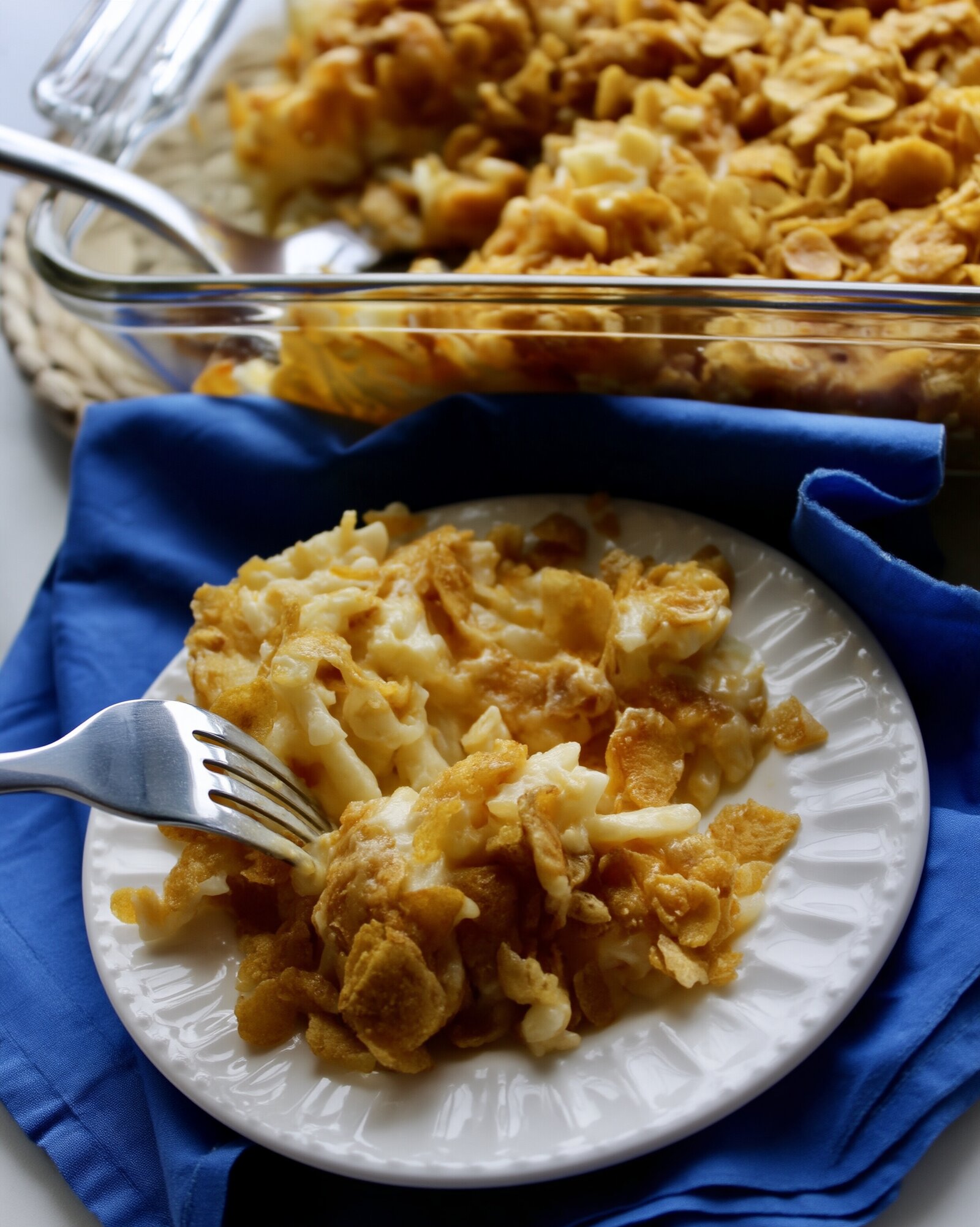
Funeral Potatoes
Ingredients
Method
- Thaw hashbrowns for about 1 hour in a colander.
- Move potatoes to a large bowl.
- Add sour cream, cream of chicken soup, and 1/2 cup melted butter. Mix well.
- Add salt, onion powder, and shredded cheddar cheese. Continue mixing until evenly combined.
- Spread mixture into a greased 9×13 baking dish.
- Toss crushed cornflakes with the remaining 1/2 cup melted butter.
- Sprinkle buttered cornflakes evenly over the casserole.
- Bake uncovered at 350°F for 45 to 50 minutes, until hot, bubbly, and golden on top.
Leave a Reply