This casserole has been a staple Christmas morning item in my family for years and I don’t see that changing anytime soon! I am not one to mess with a recipe if it stands the test of time.
Line a 9 x 13 dish with buttered bread slices, whisk together the custard (eggs, milk, dry mustard, and salt), add some browned sausage and cheddar cheese and refrigerate overnight. It goes directly from the refrigerator to a 350 degree oven the next morning!
If you’ve got a pound of breakfast sausage in your possession along with a carton of eggs and a loaf of sandwich bread…this is what you should do with them!
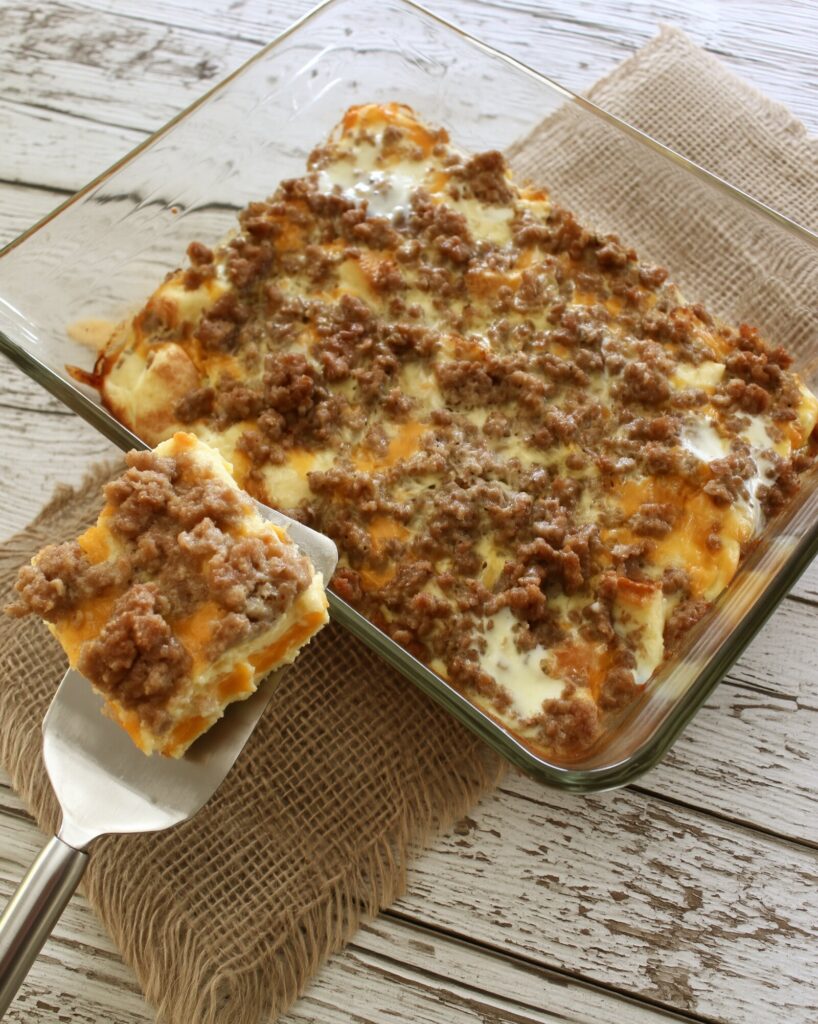
Why the Overnight Rest Matters
Refrigerating the casserole overnight allows all the bread pieces a chance to absorb as much of the egg/milk mixture as possible. Come morning it will be fairly set, barely sloshing.
This also will allow the casserole to bake more evenly throughout and stay more together (making serving less of a scramble, and you WILL thank yourself when you pull out beautiful slices/squares instead of a scramble!).
If you don’t allow the casserole to set the bread won’t have a chance to absorb the egg/milk mixture and you’ll basically end up with custard on top and soggy bread on the bottom once it’s out of the oven, definitely ruining any holiday casserole dreams.
Why This Is My Go-To for Busy Mornings
All advance-prep: assemble the night before and pop into the oven in the morning for 40 minutes of cooking time that doesn’t require your constant attention. This is important if you’re anything like me and would much rather not be at the stove on already-busy holidays like Christmas morning (a.k.a. a) opening presents; b) brewing copious amounts of coffee; and c) when ALL OF THE SUDDEN EVERYONE IS HUNGRY).
Hearty enough to satisfy hungry tummies and serves enough to feed a crowd (this is always one of the first dishes to disappear), it’s my go-to dish for Easter brunch, Mother’s Day, Christmas or anytime you’re hosting and need a great dish to complement your breakfast buffet!
The Ingredients, One at a Time
Breakfast sausage
Use one pound of your favorite sausage, cooked and drained well. (Regular breakfast sausage and sage sausage are both good choices. Add some heat by using hot sausage. I don’t care much for using Italian sausage in a breakfast casserole, as the flavor of the fennel isn’t usually appropriate in my opinion.)
Some recipes call for using the sausage raw in a breakfast casserole, but I like browning it first. Make sure it’s cooked all the way through.
Drain off any excess grease (too much grease can make the casserole a little on the greasy side). Set aside to cool slightly. Add sausage to the eggs mixture.
Bread
8 slices. Any old sliced white bread works. The slightly older the bread is, the better as drier bread absorbs more custard.
I do recommend using a softer white bread in this recipe. Dense, crusty breads, such as sourdough, do not evenly soak up the egg mixture, resulting in a casserole with parts that are too soggy, and parts that are dry and chewy.
Butter
Next you’ll spread some butter on the top side of each piece of bread. Not a lot of butter, just enough to coat it. Then place it butter-side down in your dish. I’ll show you why this works later on.
Eggs
6 eggs, and you really do need all 6 eggs. With fewer, your breakfast casserole won’t set properly and be able to be cut into squares.
I’ve had best results with using 6 eggs and 2 cups of milk, making the perfect breakfast casserole that will cut into neat little squares (when baked in a 9×13 pan).
Milk
2 cups. I like to use whole milk, 2% is ok too…but don’t use skim, as the end result is a bit more thin/runny and won’t set up properly.
Dry mustard
Don’t skip the teaspoon of dry mustard…although you won’t really be able to taste the mustard, it does add a nice flavor/bite…without it, the casserole will be missing something!
Prepared yellow mustard won’t dissolve into the custard quite like dry mustard powder does.
Salt
One teaspoon. The eggs, milk and bread aren’t salted, so the casserole really needs it.
Cheddar cheese
1 cup cheese, grated (I love sharp cheddar as it has the strongest flavor, but use your favorite cheese or whatever cheese your family will enjoy).
I recommend grating your own cheese from a block as pre-shredded cheeses (in a bag) have other ingredients added to them to keep the shreds from clumping which also keeps it from melting properly with the eggs.
You can sprinkle the cheese on top or mix into casserole (I like to mix into the casserole so all bites will have cheese).
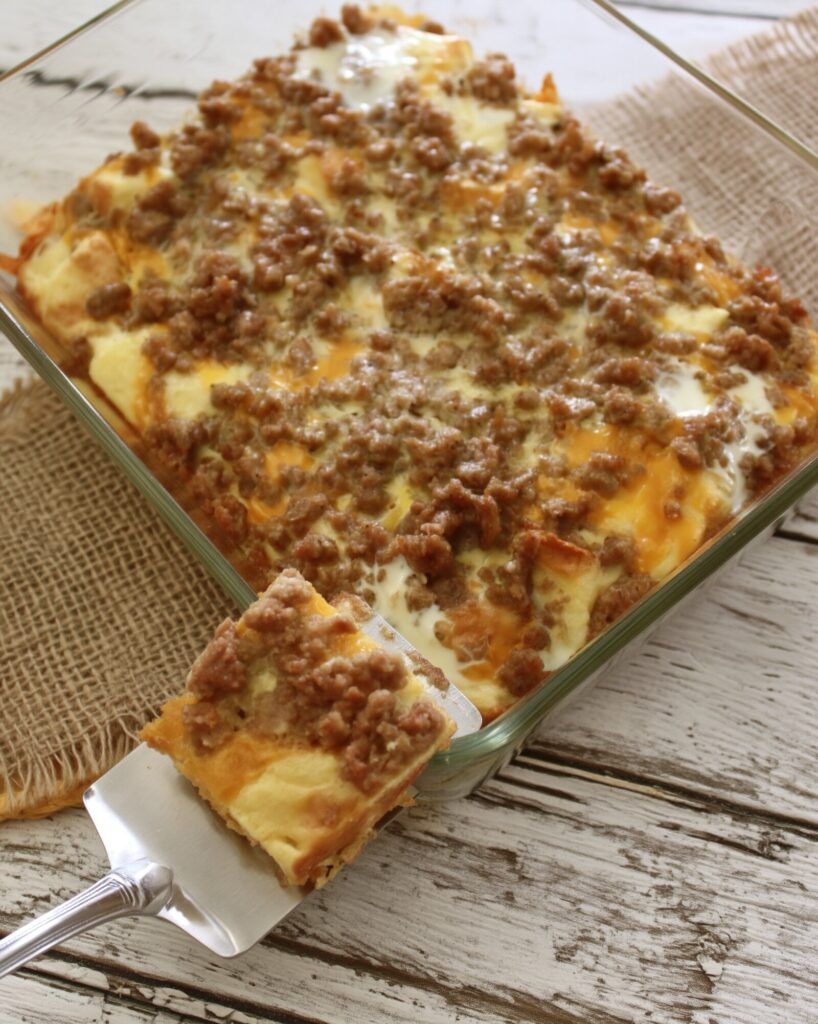
How to Make It
In a large skillet over medium high heat cook the sausage until browned and no longer pink. Break sausage up into crumbles as it cooks. Remove from heat, and drain fat. Set aside to cool.
Butter one side of each slice of bread. Place in a 9×13 baking dish buttered side down.
The butter on the bottom helps to keep bread from getting soggy after soaking all night, making a nice tender crust and adds some richness.
(I like to use a glass dish that has a cover, which makes life so much easier! I have a lid that basically snaps on. 🙂 )
In a large bowl or measuring pitcher, add eggs, dry mustard, milk, salt and whisk until smooth. Add cheddar cheese and cooled sausage and stir well to combine.
Evenly distribute egg mixture on top of bread. Cover with plastic or lid and refrigerate at least 8 hours or overnight.
When ready to serve in the am, heat oven to 350 degrees F. Remove cover, and transfer from fridge to the oven. Bake uncovered for 40 to 45 min. or until set.
To test, stick a knife or wooden tooth pick in middle, if no wet egg comes back on knife/toothpick casserole is done.
Remove from oven and allow to sit for 5 min. before cutting into squares and serve.
Makes approximately 12 large servings but recipe can easily be cut in half.
Tips for Getting It Right
- Soak the bread. If possible, assemble the casserole the night before. The bread needs at least 8 hours to soak up the custard.
- Drain the sausage really well. You don’t want too much of the skillet fat making its way into the casserole.
- Test it well. Casseroles puff up in the oven and can look perfectly cooked when they really aren’t. Always test egg casseroles in the middle (the edges set faster than the middle) – the temp should be 160°F or if you stick a knife in it should come out without any uncooked egg. If it doesn’t, keep cooking another 5 to 10 minutes no matter how long it’s already been.
- Let it sit when done. When you remove the casserole from the oven it will still be a little jiggly in the middle and may even look a tad underdone but it will continue cooking as it sits. Casseroles also deflate a tad as they cool. If you slice the casserole as soon as it comes out of the oven it will fall apart – let it sit five minutes and the slices will hold together.
What Dish to Use
I highly recommend using a glass baking dish (such as my 9×13 Pyrex glass dish). The casserole will cook more evenly throughout (edges and middle).
If you plan to assemble the night before and leave in fridge, having a dish with a lid (like mine) will come in handy. Bake in morning without the lid. Otherwise cover well with plastic wrap.
What to Serve With It
This casserole is so filling, you really don’t need anything besides some fresh fruit or fruit salad, orange juice and maybe some toast or pastries.
I like to make this recipe for a holiday brunch (with toast and pastries). Salsa and hot sauce make great additions, too!
This recipe would be great to plan ahead of time as a week day breakfast also.
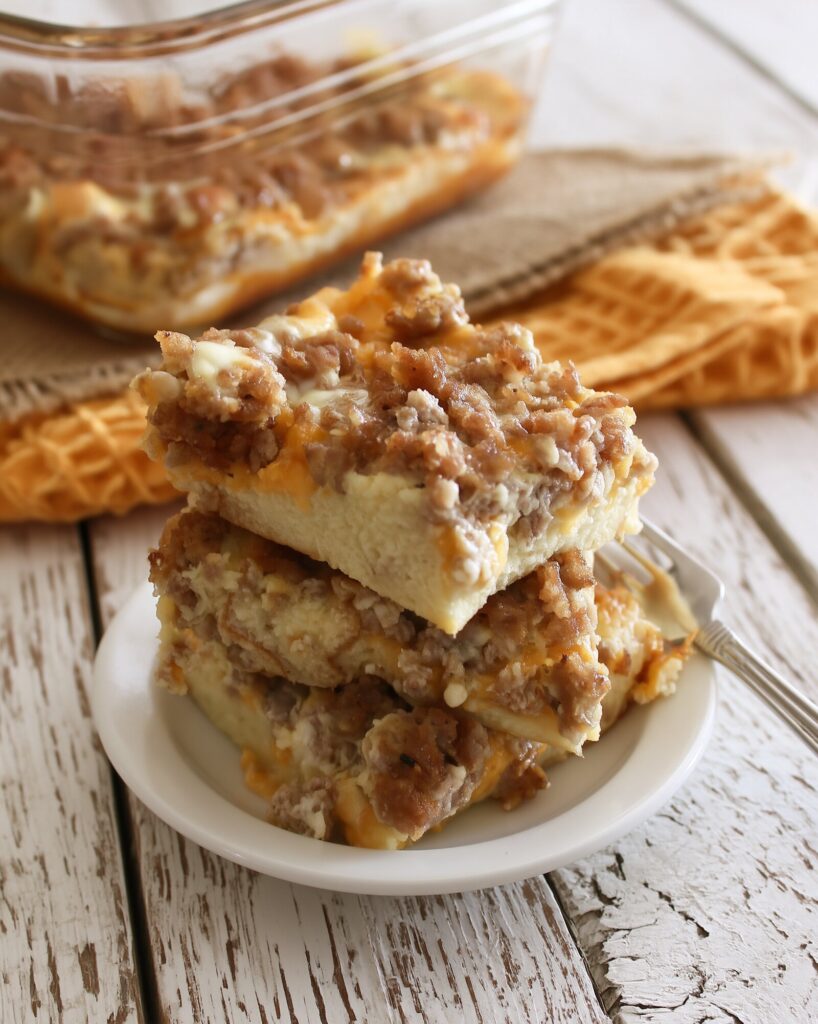
Ways to Change It Up
Swap the meat
Substitutions for pork sausage: Turkey or chicken sausage. Really whatever type of sausage you like best!
Or use 1-2 cups of cooked diced ham (a great use for some Holiday leftover ham), or 8-10 slices of bacon, cooked and crumbled.
Add vegetables
Finely diced pepper/onion and cooked mushrooms can be added to the cooked sausage.
If adding mushrooms/peppers/onions to recipe: Cook with sausage or separately in a non stick skillet, then add to sausage.
Change the cheese
Substitutions for cheddar cheese: Pepper Jack, Colby Jack, Monterey Jack cheese (Pepper Jack will add some heat!)
Try a different bread
Texas toast, thickly sliced bread for sandwiches or croissants cut in halves would work really well also and make a heartier casserole.
Use crescent dough instead of bread
Instead of using bread, try crescent roll dough (pressed flat into the bottom of the dish and used just as you would the bread). This will make a flakier, richer casserole.
I think that if you used pieces of biscuit dough it might work too (I haven’t personally tried this).
Make it gluten-free
Use gluten-free sandwich bread. The rest of the ingredients are naturally gluten-free, but check the label on your sausage to be sure.
Make it vegetarian
Omit the sausage and add 1 to 2 cups of vegetables. Bell pepper, onion, mushrooms and spinach work well here. Saute the veggies first to drive off excess water or your casserole will be watery.
Make Ahead, Storage and Reheating
This casserole can be made up to a full day in advance and refrigerated (minimum chilling time is 8 hours).
Casseroles will keep, tightly covered, for up to 4 days in the refrigerator. To reheat, either cover a serving and microwave on high for 1 to 2 minutes, until hot throughout or cover casserole tightly with aluminum foil and heat in a 325 degree oven for 15 to 20 minutes.
After casserole is baked and cooled, separate into individual servings. Wrap tightly with plastic wrap and store in the freezer for up to 2 months. Remove desired number of servings from the freezer and thaw overnight in the refrigerator. Heat according to directions above.
Turn Leftovers Into Breakfast Hash
The leftover squares make a really good hash. Heat some butter in a skillet on medium high heat, then add the squares. When they are hot, use a spatula to break them up into pieces and let the crumbles turn golden and crisp.
Plate the hash, top with a fried egg and a couple shakes of hot sauce.
FAQ
Can I bake it without the overnight chill?
If time allows, chill overnight, but you can shorten that time. The overnight chilling contributes to the texture of the casserole I like best, but if you’re short on time you can get by with as little as 2 hours in the refrigerator (longer is better; this gives the bread a chance to soak up some of that custard). Less than 2 hours and the bread will float in egg.
Why is my casserole soggier than yours?
Two possible reasons come to mind. Have you been shorting on chilling time (see answer above)? Have you thoroughly drained any cooked sausage you added? Extra liquid that the bread can’t soak up will make for a soggier breakfast casserole. Adding raw veggies can also make for extra moisture.
How will I know when it’s done?
Stick a knife in the center; if it comes out with wet, runny egg it needs more time in the oven. If it comes out clean, you’re good to go!
Can I double (or halve) this recipe?
You certainly can. Just be sure to double all of the ingredients. It’ll either need to bake in two 9×13 pans or in a really big roasting pan. (And if you opt for the big roasting pan and find your casserole is nice and thin, it may take an extra 10-15 minutes in the oven). It also halves well, in case you don’t need to feed quite as many.
Can I put cheese on top instead?
Sure. I like it blended in so there’s some in every bite. You do you!
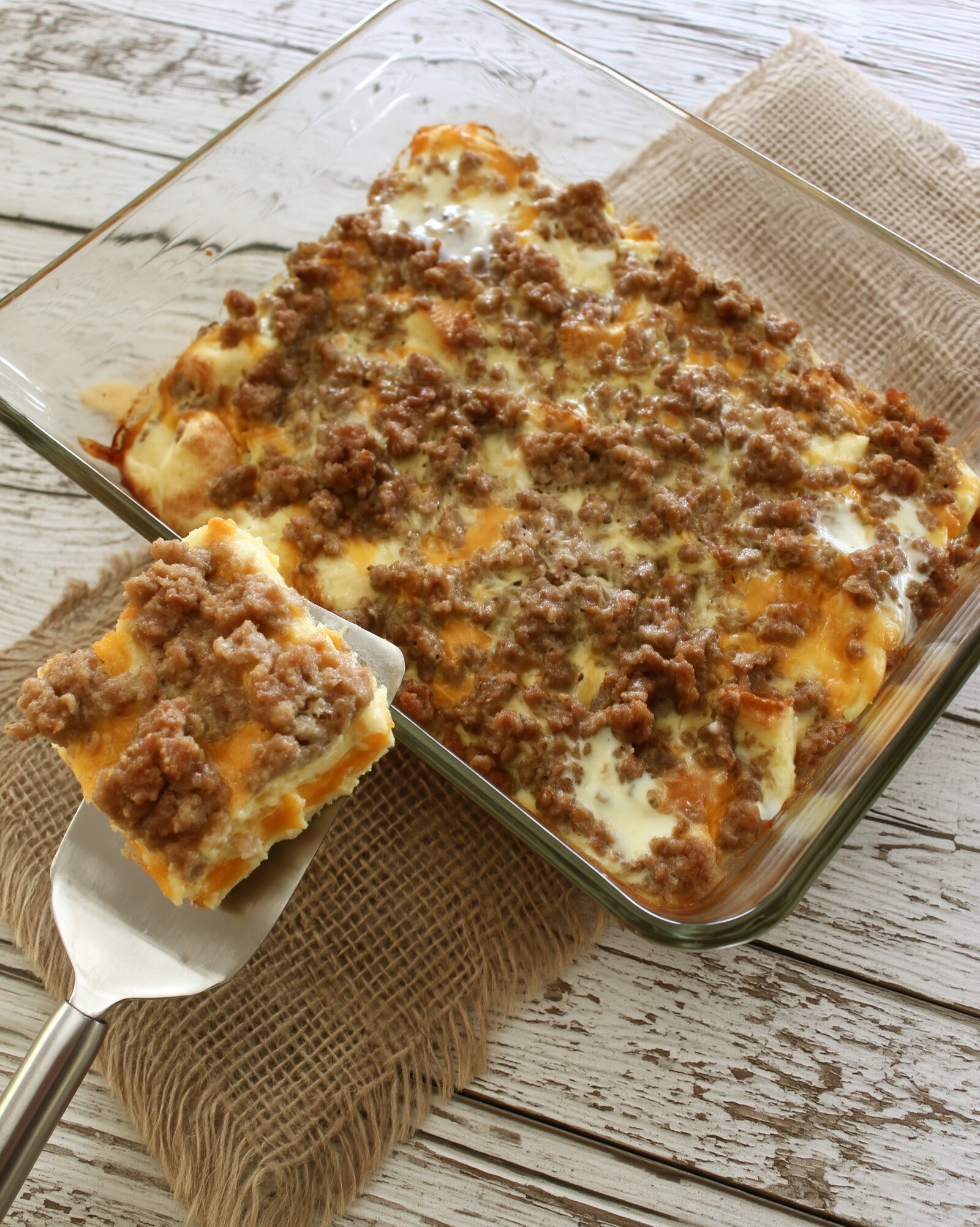
Ingredients
Method
- Butter bread slices and press butter side down in 9×13 dish
- Mix together eggs, mustard, milk and salt
- Mix in cheese and sausage
- Pour over bread slices
- Refrigerate 8 hours or overnight
- Bake uncovered at 350 degrees for 40-45 minutes
- Enjoy!
Leave a Reply